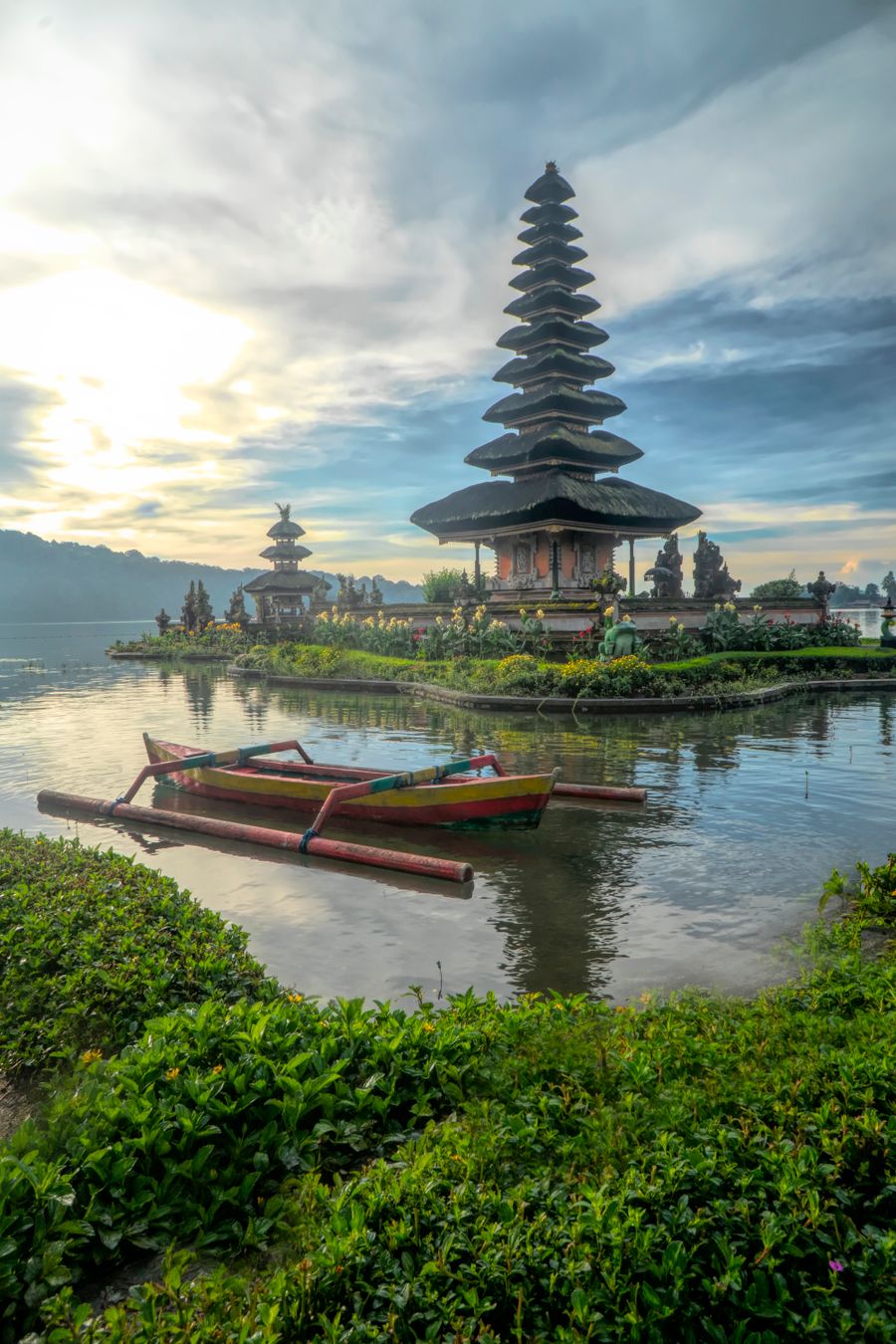
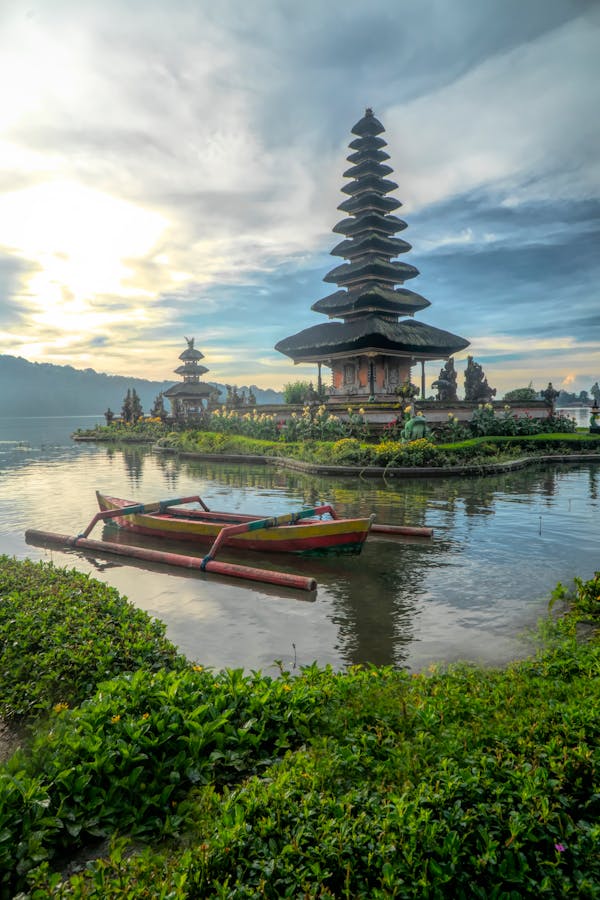
Explore the history, spirituality, and living culture that make Bali one of the world's most extraordinary destinations.
Bali's history stretches back over 2,000 years, shaped by waves of Indian, Javanese and Chinese cultural influence. By the 9th century, complex kingdoms flourished across the island, leaving behind extraordinary temples and artistic traditions that endure to this day.
When the Majapahit Empire fell to Islamic rulers in the 15th century, much of the Javanese Hindu nobility fled to Bali, reinforcing and enriching the island's Hindu-Buddhist spiritual culture — a flame that still burns brightly across every village and ceremony.
Early Austronesian peoples settle Bali, establishing rice farming and ancestor worship traditions.
The Warmadewa dynasty rules Bali; Hinduism and Buddhism flourish. Great temples are constructed.
The great Javanese Majapahit Empire extends control, deeply shaping Balinese art, religion and governance.
Bali becomes part of the newly independent Republic of Indonesia, preserving its unique cultural identity.

Unlike anywhere else on earth, spirituality and art are not separate pursuits in Bali — they are the very fabric of everyday existence.
Approximately 87% of Bali's population practises a unique form of Hinduism called Agama Hindu Dharma — a blend of Hindu, Buddhist, and animist beliefs found nowhere else on earth.
The Balinese believe in maintaining harmony between humans, nature, and the spiritual world — a philosophy called Tri Hita Karana. This manifests in the elaborate rituals, colourful offerings (canang sari) placed daily at temples and homes, and the great festivals that punctuate the Balinese calendar.
Bali's dances are living art forms passed down through generations, performed at temples and cultural stages nightly. The Kecak fire dance at Uluwatu is unmissable.
The town of Ubud has been a creative hub for centuries. Intricate wood carvings, traditional wayang shadow puppet paintings and silverwork are celebrated worldwide.
Food is ceremony in Bali. Babi guling (suckling pig), lawar (spiced minced meat salad) and bebek betutu (slow-roasted duck) are rooted in centuries of ritual cooking.
The Balinese calendar is filled with colourful celebrations. Here are the most significant festivals that travellers may be fortunate to witness.
The Balinese New Year (usually March) is marked by a full day of total silence, fasting and meditation. All activity on the island halts — no traffic, no electricity, no noise. Visitors are required to stay indoors. The night before, enormous demon effigies (ogoh-ogoh) are paraded through the streets in noisy processions.
Held every 210 days, Galungan celebrates the victory of dharma (good) over adharma (evil). Villages are decorated with tall bamboo poles adorned with offerings (penjor). Family spirits return to earth and are welcomed in elaborate household ceremonies. Kuningan, ten days later, marks the spirits' departure.
Balinese cremation is a joyful occasion, not a mournful one — it liberates the soul for reincarnation. Elaborate floats carry the deceased to the cremation ground in a colourful procession. Witnessing a Ngaben ceremony is a profound privilege and insight into the Balinese worldview.
Saraswati celebrates the Hindu goddess of knowledge — books and holy texts are blessed and not to be read. Pagerwesi, four days later, is a day for strengthening the spiritual self against evil. Both fill temples with offerings, prayers and gamelan music.
All images on this page are sourced from Pexels under their free-to-use licence. Photos by Tom Fisk and other Pexels contributors.